
Strategic Imperatives of China's Growth: Implications for India's Security
- Select Book Format
- Quantity
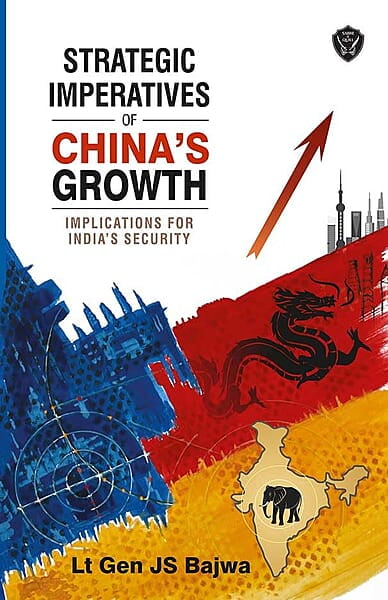
Strategic Imperatives of China’s Growthpresents a comprehensive study of China's rise as a major global power and its implications for India's security, foreign policy, and strategic interests. Originating from the author's doctoral research and enriched by years of professional military experience, it combines academic analysis with practical insights to examine one of Asia's most consequential bilateral relationships.
A central theme of the book is the historical evolution of the India-China boundary dispute. The author traces the roots of the issue through the complex history of Tibet and its changing relationship with China, arguing that the contemporary border problem cannot be understood without examining the political and strategic developments that followed China's annexation of Tibet. This perspective provides a deeper understanding of the challenges surrounding the Line of Actual Control.
The book also offers a unique insider's account of efforts to manage and resolve border tensions. Drawing on the author's participation in official India-China boundary-related mechanisms, it highlights the diplomatic and military processes aimed at clarifying differing perceptions of the border and fostering confidence-building measures between the two countries.
Beyond the boundary question, the study explores China's strategic culture, political system, military modernization, and economic transformation. It examines the continuity of Chinese strategic thought and the role of the one-party state in pursuing long-term national objectives, contributing to China's emergence as a significant regional and global power.
By analyzing the legacy of the 1962 India-China War, subsequent attempts at rapprochement, and China's evolving strategic posture, the book provides valuable insights into the opportunities and challenges facing India. It is an essential resource for scholars, policymakers, military professionals, and readers interested in contemporary Asian geopolitics and international relations.