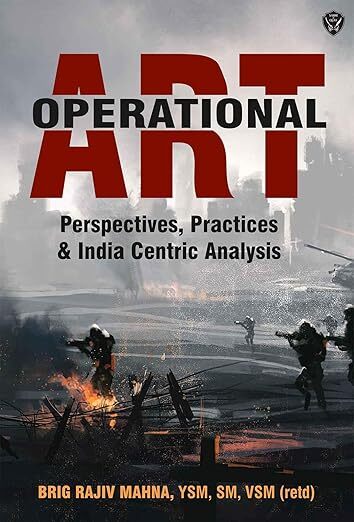
OPERATIONAL ART: Perspectives, Practices & India Centric Analysis
- Select Book Format
- Quantity
Substantial focus of the existing body of thought in India is either on general strategic theories of national security with point of departure as national security policy/strategy or on tactical execution of military operations.
Doctrinal treatment of the subject of operational art is, at best, ambiguous within Indian military discourse. It is not accidental. Root cause of this issue is the lack of a shared understanding of grammar and language of military operations among the members of the national security establishment.
Operational planning process is conceptually linked to the practice of operational art. No work known to author covers the military operational planning process through the prism of analysis, and logic of synthesis from the Indian perspective.
This book is an attempt to fill the gaps by exploring contours of operational art from first principles construct. Studying operational art from first principles involves, understanding its essence by logically deconstructing the relationship between strategy, operations, and tactics—and after that reconstructing the concept around core realities about war, warfare, decision-making, and campaign dynamics. Aim of developing the foundational content of this book through first principles thinking is to identify the fundamental purpose and essential tenets of operational art, free from legacy influences that could compromise a clear understanding of this critical subject.
Theme of this book is—To facilitate the development and refinement of cognitive approaches within the community of practitioners of operational art, with particular emphasis on India's strategic and operational context.
Purpose of this book is to suggest an Indian operational planning process which is common for all three services and spans two levels of military planning—operational and tactical.
The objective is not to dismiss unfamiliar knowledge without consideration. The approach taken in developing this book involves understanding the rationale behind global operational planning practices and thoughtfully adapting such best practices—which are aligned with specific requirements of the Indian security context.
This work is intended for officers of the three services of Indian armed forces, members of national security establishment, defence scholars, policy analysts, and advanced students of war and strategy. It also aims to support institutions such as the National Defence College, Defence Services Staff College, College of Combat and other training establishments of Indian armed forces, in expanding their curriculum and thought regarding joint campaign planning and operational thinking.