
Mountain Warfare: Operational Imperatives for India
- Select Book Format
- Quantity
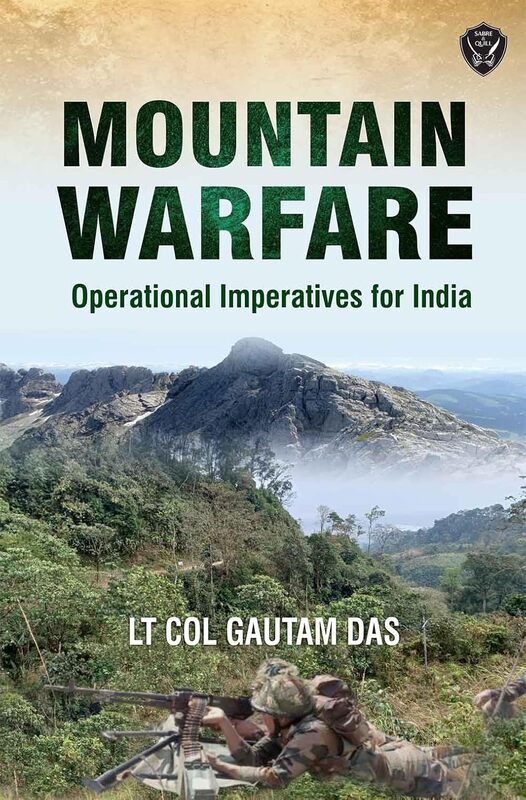
Mountain warfare is the most critically important form of warfare for India, ever since Pakistan went overtly nuclear in 1998. Any future war with India’s two potential adversaries, Pakistan and China is more than likely to be fought in the mountainous areas along India’s northern and north-western frontiers. The opposing territorial claims of both India and China along the Indo-Tibetan border in the Himalayas, and thus the resultant disputed boundaries, also ensure that any possible armed conflict with China will be in the Himalayan mountain sector.
The shape of any possible future war that India may be forced to fight has been debated and written about by numerous thinkers and authors who have aired their views since 1999, when India’s last armed conflict was fought on India’s northernmost frontier.
From open-source information in 2011 and 2013, it is believed that India has decided to gradually shift from a purely defensive ‘threat-based’ military policy to a ‘capability-based’ policy. It has created a Mountain Strike Corps for mountain operations against China, as a credible deterrent at the operational level. A doctrine for this will allow re-structuring of the all-important logistical and tactical organisation, and guide armaments and equipment development.
India has also decided to prepare for ‘Plateau Warfare’ against the Chinese, judging by its development of a suitable light tank. Both ‘credible deterrence’ and Plateau Warfare are only possible if the practical issues of mountain warfare on both the China and the Pakistan fronts are clearly understood by planners and practitioners alike.
In this book Gautam Das brings to the fore those practicalities, through examples from India’s post-Independence history of mountain warfare, and examines both the theoretical aspects and practical aspects through the prism of India’s actual history of mountain warfare since 1947.
**********************************
Gautam Das was in the Indian Army from 1968 to 1991, and was an officer of the 11th Gorkha Rifles, an infantry regiment composed of mountain men. Apart from a childhood exposure to the western Himalayas, and boyhood intimacy with the eastern Himalayas at a boarding school at Darjeeling, he has operated in the main Himalayan Range, the Pir Panjal Range, as well as the highest reaches of the Patkai Range on the Indo-Myanmar frontier.
He served in regimental service with his parent battalion 2/11 Gorkha Rifles, with the Special Frontier Force, and with the Assam Rifles, as well as on the General Staff of a Corps Headquarters in the mountains facing both Pakistan and China. He was trained at the High Altitude Warfare School, and was also a mountaineer and leader of an expedition that climbed one of the prominent peaks of the Western Himalayas.
He brings his experience on the ground as an infantry and Special Forces officer, mountaineer, as well as on the General Staff of a mountain formation to this new book that examines the modern requirements for fighting in the mountains.