
Balochistan : An Ancient Land In Modern Turmoil
Non-returnable
- Select Book Format
- Quantity
Product Details
PRE-ORDERS FOR THIS BOOK IS NOW OPEN. BOOKS WILL BE DISPATCHED AFTER 15TH JULY.
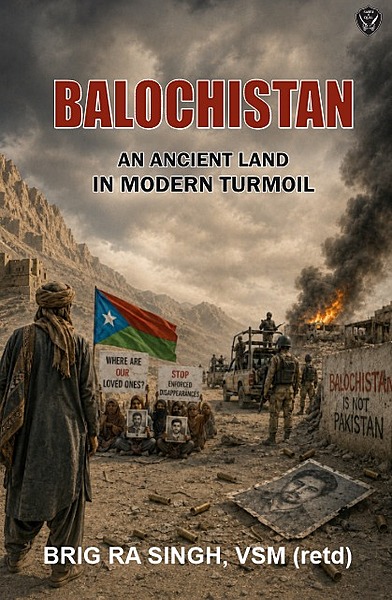
Balochistan: An Ancient Land in Modern Turmoil is a sweeping exploration of one of South Asia's most complex and least understood regions. Stretching across nearly half of Pakistan's territory, Balochistan is a land of immense natural wealth, ancient civilizations, and enduring cultural traditions. Yet beneath its rugged mountains, deserts, and strategic coastline lies a story of political conflict, economic exploitation, and an ongoing struggle for identity and self-determination. This book traces the region's journey from the ancient settlements of the Makran coast and the tribal legacy of the Khanate of Kalat to the turbulent realities of modern geopolitics shaped by Gwadar Port and the China-Pakistan Economic Corridor (CPEC).
Through historical analysis and contemporary insight, the book examines how Balochistan's vast reserves of gas, gold, copper, and other resources have failed to translate into prosperity for its people. Instead, the province continues to face poverty, underdevelopment, militarization, and allegations of enforced disappearances and political repression. The work highlights the deep grievances surrounding the 1948 annexation of the Khanate of Kalat into Pakistan, a moment many Baloch regard as the beginning of decades of marginalization and resistance.
At the heart of this narrative is the resilience of the Baloch people. Their language, oral poetry, music, tribal traditions, and fierce sense of autonomy have survived despite cultural suppression and political instability. The book captures how intellectuals, activists, students, and the global Baloch diaspora continue to preserve their identity while advocating for justice, dignity, and recognition on the international stage.
More than a regional history, this work is a reflection on sovereignty, human rights, and the universal struggle of marginalized peoples seeking control over their future. By blending history, culture, politics, and geopolitics, the book invites readers to engage with Balochistan not as a forgotten frontier, but as a vital and contested land whose story carries profound implications for the modern world.